
Gate sizes, widths and how to measure
Standard Irish pedestrian side passages measure 0.9 m to 1.1 m clear, single-car driveways run 2.8 m to 3.4 m, two-car or rural entrances run 3.5 m to 4.5 m, and farm field gates are built to 12 ft (3.66 m) or 14 ft (4.27 m).
Getting rough opening measurements right before pricing, and the clearance allowances fitters subtract for hinges and locks.
Free, no obligation. One local fitter prices it, not five.
- 0.9–1.1 mtypical pedestrian side passage
- 2.8–3.4 mstandard single-car driveway
- 3.5–4.5 mwide or rural driveway entrance
- 50–75 mmbottom clearance above drive

Standard Irish opening sizes at a glance
A modern family SUV measures roughly 2.1 m across unfolded wing mirrors. On an angled turn off a narrow road, an opening narrower than 2.8 m feels tight every single day; aim for 3.0 m to 3.5 m if you are building new piers under planning permission.
Price my gate
Four quick taps and our price shows before we ask for a phone number. One local gate fitter rings you, not five.
Steel driveway gates, 3.5 m to 4.5 m wide, manual: €2,400 to €3,800, supplied and fitted.
How the price is worked out
The range reflects typical supply-and-fit gate prices in Ireland for that material, opening width and operation. Manual driveway figures cover gates, posts or hanging ironwork and fitting into a ready opening. Electric options add motors, safety photocells and handsets. New masonry piers, heavy groundworks and armoured cable trenching from the house depend on your site and are priced after a look. Ask whether VAT is quoted at 13.5% or 23%. Use this figure to plan: only a fitter who measures the opening gives a firm quote.
Four measurements to take before a fitter calls
- Measure pier to pier at three heights. Check near the ground, at waist height and near the top cap. Use the smallest figure so leaves never jam.
- Check ground fall across the swing arc. Lay a straight timber or check visually whether the driveway rises behind the piers; even a 100 mm rise over 1.6 m changes hinge height.
- Check pier thickness and recess. Note whether existing piers are rendered block, brick or cut stone, and how far back the hinges will sit.
- Account for hardware gaps. Fitters subtract roughly 50 mm to 80 mm from the structural opening for hanging posts, adjustable hinges and the central meeting stop.
Related gate guides
 Gate piers and pillarsBlock, rendered and stone piers, foundations and steel posts.
 Swing gatesSingle and double hinged gates, swing clearance and slopes.
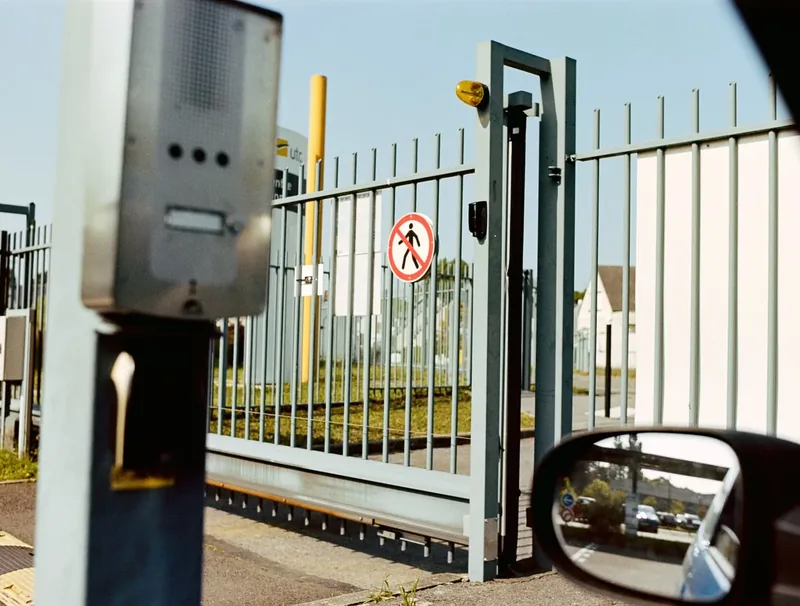 Sliding gatesTracked and cantilever sliding gates for tight or sloped drives.
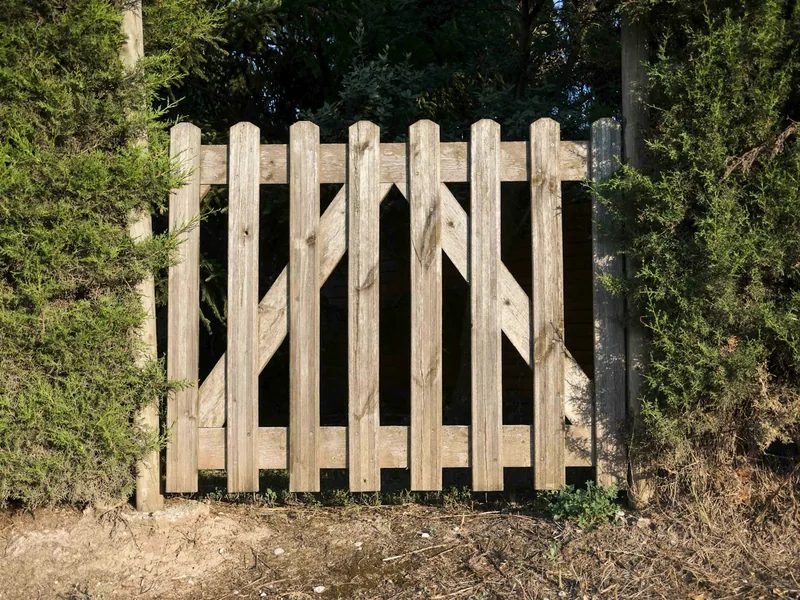 Side and pedestrian gatesNarrow passage gates in timber, steel and composite from €340.Planning permissionClass 5 height limits, road entrances, sightlines and Section 5.
 What gates costFull Irish price guide by material, width, automation and civils.
Common questions before you buy
What is the standard driveway gate width in Ireland?
Most suburban driveways sit between 2.8 m and 3.4 m clear between piers. Rural entrances commonly span 3.5 m to 4.5 m.
How high should driveway gates be?
Residential privacy gates are typically 1.6 m to 1.8 m high, staying comfortably below the 2 m Class 5 exemption cap.
How much gap should be left under a gate?
Allow 50 mm to 75 mm over level tarmac or cobble so grit, leaves and frost heave never scrape the bottom rail.
Should I order gates before my piers are built?
Wait until the piers are capped and rendered, or confirm exact finished pier-to-pier dimensions with both the blocklayer and gate maker.
All gate pages and guides
Gate types
Fitting & specs
See your gate price before anyone rings
Pick the material, opening width and manual or electric. When you want a written price, your details go to a single gate fitter in your county.